


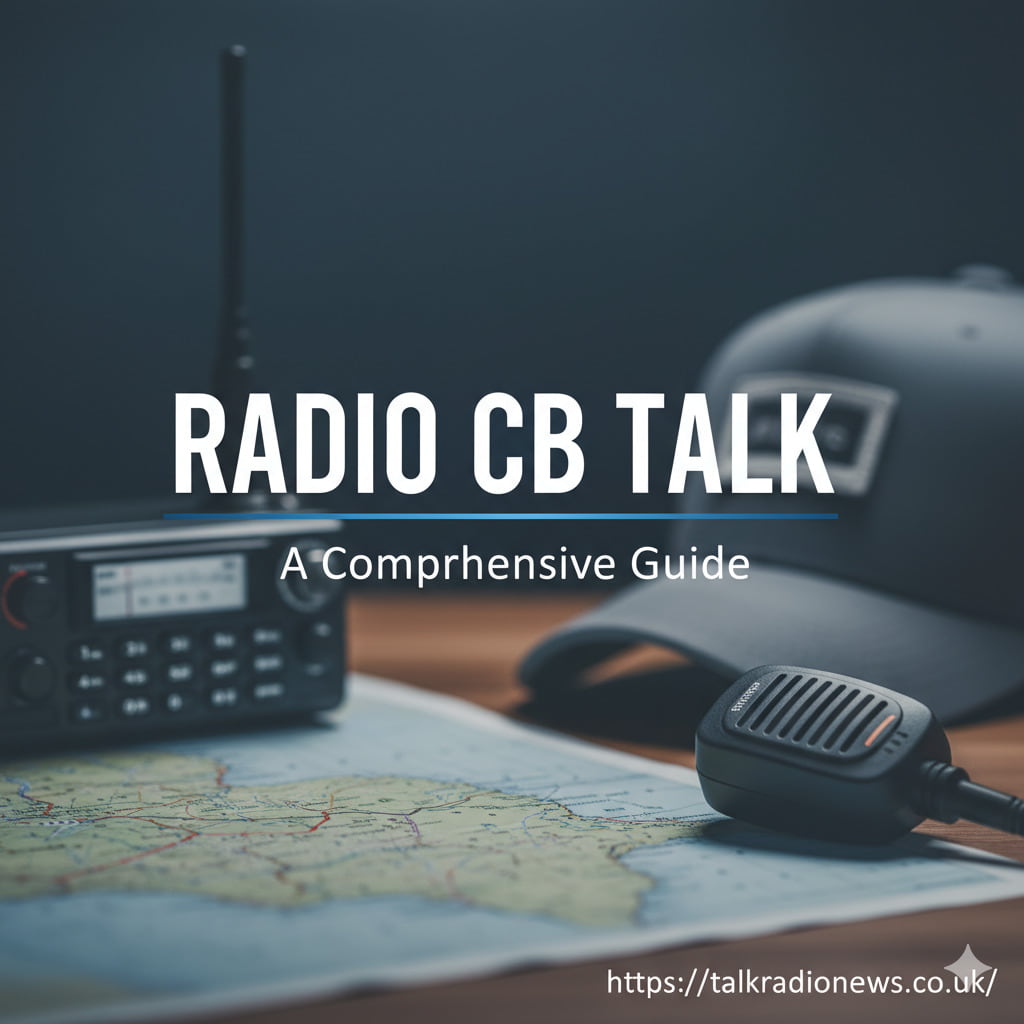
Welcome to the exciting world of Citizens Band radio! Whether you’re a long-haul trucker, an off-road adventurer, or just someone curious about this classic form of communication, you’ve come to the right place. For decades, CB radio has connected people across highways and communities, creating a unique culture filled with special codes and lingo. This guide will break down everything you need to know about radio cb talk, from the essential equipment and slang to the rules of the airwaves. It’s a system that’s about more than just talking; it’s about connection, safety, and being part of a larger community. Let’s get you ready to key up the mic and join the conversation.
What Exactly is CB Radio?
Citizens Band (CB) radio is a public, two-way radio system that allows for short-distance communication between individuals. Think of it as a social network over the air. It operates on 40 shared channels in the 27 MHz frequency band. Unlike ham radio, you don’t need a license to operate a CB radio in the United States, which makes it incredibly accessible for everyone. This ease of use is a big reason why it became so popular with truck drivers in the 1970s and remains a vital tool for them today. The Federal Communications Commission (FCC) sets the rules for CB usage to ensure the channels remain orderly and available for all. It’s a simple, reliable way to get real-time information about traffic, weather, or just to have a friendly chat with someone nearby.
A Brief History of CB Radio
The CB radio service was first established in the United States by the FCC in 1945. Initially, it was a complex system used by businesses and farmers. However, everything changed in the 1970s. The oil crisis led to a national 55 mph speed limit, and truck drivers began using CB radios to warn each other about speed traps and find fuel. This era launched CB radio into popular culture, with movies like Smokey and the Bandit and hit songs like C.W. McCall’s “Convoy.” The lingo, the handles, and the spirit of rebellion made it a nationwide phenomenon. While smartphones have changed how we communicate, CB radio has maintained its place as a dependable tool, especially in areas with poor cell service.
Why People Still Use CB Radios Today
You might think that in an age of constant connectivity, CB radios would be obsolete. However, they offer distinct advantages that keep them relevant. For professional drivers, they are an indispensable tool for receiving instant updates on road conditions, accidents, and traffic jams directly from other drivers on the same route. Off-road enthusiasts and RVers rely on them for vehicle-to-vehicle communication in remote areas where cell phones are useless. It’s also about community. The channels can be a source of camaraderie on a long, lonely drive. There’s a simple, direct, and reliable nature to radio cb talk that modern technology can’t always replicate.
Getting Started with Radio CB Talk
Jumping into the world of CB radio is easier than you might think. It primarily involves choosing the right equipment and understanding the basic functions. The core components you’ll need are a CB radio unit (transceiver) and an antenna. The quality of these two items will directly impact your ability to send and receive clear signals. Don’t feel overwhelmed by the options. Most starter kits come with everything you need. The key is to focus on a setup that matches your intended use, whether that’s installing it in a truck, a car, or using a handheld device for short-range chats.
Choosing Your First CB Radio
Selecting the right CB radio depends on your needs and budget. There are three main types: mobile/base station units, all-in-one handheld units, and handheld portables.
- Mobile/Base Station Units: These are the most common type, designed for vehicle installation. They offer the best performance and range.
- All-in-One Handhelds: These units have the radio and antenna built into a single handset, making them easy to move between vehicles.
- Handheld Portables: Similar to walkie-talkies, these are great for use outside the vehicle but have a much shorter range.
For beginners, a standard mobile unit from a reputable brand like Cobra or Uniden is a great starting point. Look for features like a built-in SWR meter for antenna tuning, RF gain control, and weather channels.
The Importance of a Good Antenna
Your antenna is arguably the most critical part of your CB setup. A high-quality radio with a poor antenna will perform badly, while a basic radio with a great antenna can perform exceptionally well. The antenna’s job is to convert electrical signals into radio waves and vice-versa. The taller the antenna, the better your range will generally be. The most important step after installing your antenna is tuning it using an SWR (Standing Wave Ratio) meter. An untuned antenna can reflect power back into your radio, potentially damaging it and severely limiting your range. Proper tuning ensures your signal goes out as efficiently as possible.
Mastering the Lingo: How to Speak CB
One of the most iconic aspects of CB radio is its unique slang. This colorful language was developed to make communication quick, clear, and concise. While you don’t need to be a walking dictionary of terms, knowing the basics will help you understand conversations and participate confidently. This lingo is a core part of what makes radio cb talk so distinct.
The 10-Codes
The “10-codes” are standardized phrases used to communicate common messages. The most famous is “10-4,” which means “Okay” or “Message received.” While there are hundreds of codes, you only need to know a few to get by.
Here are some of the most essential 10-codes:
- 10-1: Receiving poorly
- 10-4: Affirmative, okay
- 10-9: Please repeat your last transmission
- 10-10: Standing by
- 10-20: What is your location? (often said as “What’s your 20?”)
- 10-33: Emergency traffic
- 10-200: Police needed at…
Common CB Slang and Phrases
Beyond the 10-codes, a rich vocabulary of slang terms brings conversations to life. A “handle” is your nickname on the air. “Smokey Bear” refers to a police officer, and a “bear trap” is a speed trap. Understanding these terms will help you decipher what’s happening on the channels. For instance, if you hear someone say, “You’ve got a Smokey taking pictures at the 101-mile marker,” you’ll know there’s a police officer with a radar gun ahead.
CB Slang Comparison Table
Slang Term | Meaning |
|---|---|
Breaker 1-9 | I want to start a conversation on Channel 19 |
Handle | Your nickname on the radio |
Smokey Bear | State police officer |
Bear Trap | A speed trap |
Alligator | A piece of tire tread on the road |
Chicken Coop | A weigh station for trucks |
Rubbernecker | A driver slowing down to look at an accident |
Back Door | The last vehicle in a convoy; someone behind you |
Rules and Etiquette of the Airwaves
To keep the 40 CB channels usable for everyone, the FCC has established some basic rules. Beyond the official regulations, there is also a set of unwritten rules—or etiquette—that promotes respectful and efficient communication. Following these guidelines ensures a positive experience for all users. The main goal is to be clear, concise, and courteous. Remember that you are sharing a public channel, and what you say can be heard by anyone nearby.
Official FCC Regulations
The FCC’s rules for CB radio are straightforward. You cannot transmit with more than 4 watts of power (for AM) or 12 watts (for SSB). You are not allowed to communicate with stations more than 155.3 miles away. Obscene language is prohibited, as is intentionally interfering with other people’s conversations. While many users ignore some of these rules (especially regarding power output), it’s important to be aware of them. For a complete overview, you can check the FCC’s official CB Radio Service page.
Unwritten Channel Etiquette
Good manners go a long way on the CB airwaves. Before transmitting, listen to the channel to ensure it’s clear. Don’t “step on” or talk over another person’s transmission. When you want to start a conversation, say “Breaker 1-9” (or whichever channel you’re on) and wait for a response. Keep your transmissions short and to the point. If you have a longer conversation, it’s polite to move to a less crowded channel. Channel 9 is officially reserved for emergency communications, and Channel 19 is the unofficial “trucker channel” used for highway information.
Conclusion
Getting started with radio cb talk is a rewarding journey into a unique communication culture. It’s a practical tool for safety and information on the road and a fun way to connect with a diverse community of users. From choosing your radio and antenna to learning the lingo and rules of etiquette, you now have the foundation to confidently get on the air. The best way to learn is by listening and then participating. So, pick out your handle, tune your antenna, and don’t be afraid to say “Breaker 1-9.” You’ll find a welcoming community ready to share the airwaves.
Key Takeaways
- CB radio is a license-free, public two-way radio system on 40 channels.
- It remains a vital tool for truckers, RVers, and off-roaders for communication in areas without cell service.
- Your setup consists of a radio (transceiver) and an antenna; the antenna’s quality and tuning are crucial for performance.
- CB culture has its own lingo, including 10-codes (like 10-4) and slang terms (like “Smokey Bear”).
- Follow both FCC rules and unwritten etiquette, such as keeping transmissions short and using Channel 9 for emergencies only.
Frequently Asked Questions (FAQ)
1. Do I need a license to operate a CB radio?
No, in the United States, you do not need a license to operate a CB radio, which makes it very accessible for personal use.
2. What is the average range of a CB radio?
The range of a CB radio can vary greatly depending on the terrain, antenna quality, and weather. On average, you can expect a range of 1 to 5 miles for a standard mobile unit. With a larger base station antenna, this can extend to 20 miles or more.
3. What is the difference between AM and SSB on a CB radio?
AM (Amplitude Modulation) is the standard mode for all 40 CB channels. SSB (Single Sideband) is a more efficient mode available on some higher-end radios. It splits the AM channel into Upper and Lower Sidebands, allowing for more conversations and providing greater power (12 watts vs. 4 watts), which can significantly increase your range.
4. What is the most important channel to monitor?
For highway travelers, Channel 19 is the most important as it’s the national channel for truckers and road information. Channel 9 is designated for emergency use only. You can find more insights on radio news and trends at talkradionews.co.uk.












Leave a comment