


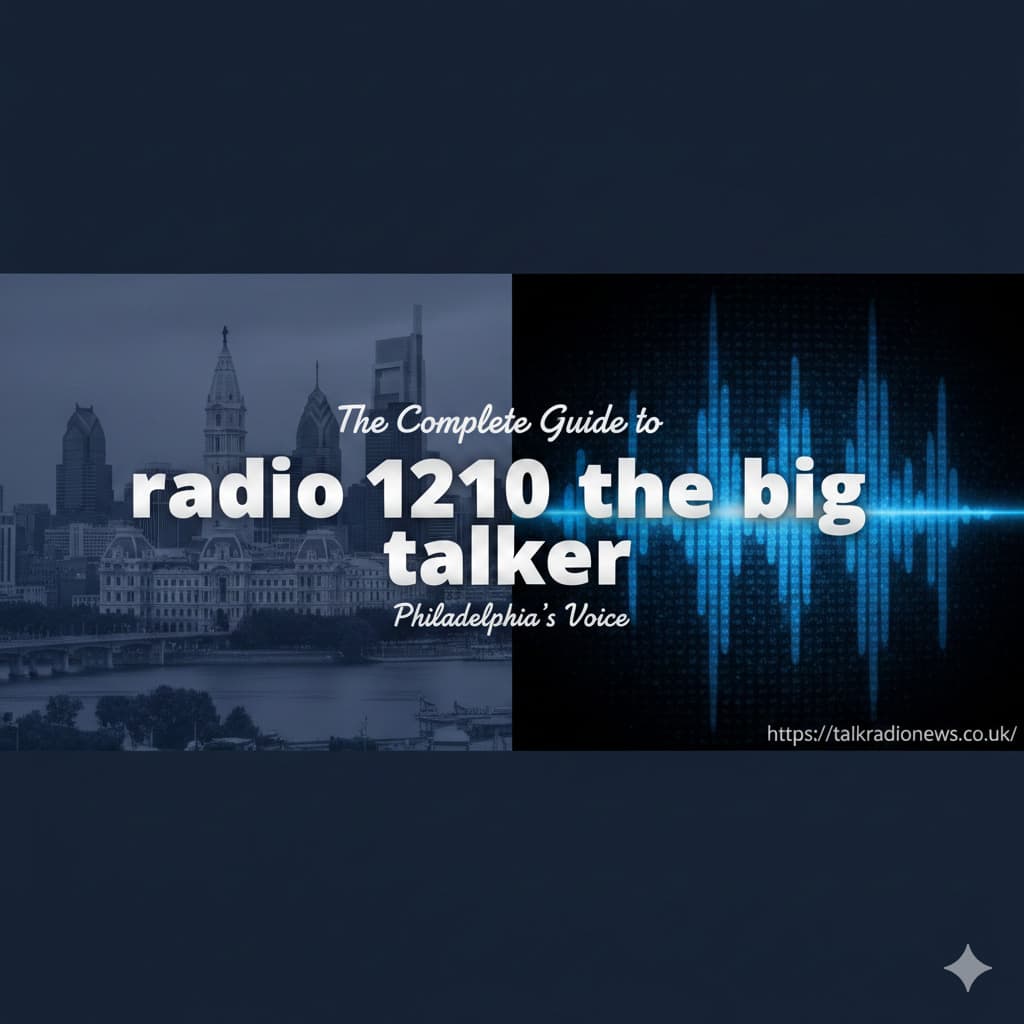
For decades, talk radio has served as a primary source of news, opinion, and community connection for millions of Americans. In Philadelphia, one station stands out as a dominant force in the conservative talk landscape. Radio 1210 the Big Talker (WPHT) has established itself as a go-to destination for listeners seeking local insights, national political commentary, and lively debate. Whether you are commuting down I-95 or listening from home in the suburbs, this station offers a mix of voices that keep the conversation going all day long.
- Key Takeaways
- A Brief History of WPHT 1210 AM
- The Local Lineup: Philadelphia’s Voices
- National Heavyweights on the Airwaves
- Comparing Talk Radio Formats
- The Role of Digital Media and Podcasting
- Community Involvement and Events
- The Importance of Talk Radio in News Cycles
- The Future of AM Radio
- Frequently Asked Questions (FAQ)
- What is the call sign for the Big Talker?
- Can I listen to the station outside of Philadelphia?
- Who are the main hosts on the station?
- Is the station strictly political?
- How can I call into a show?
- Conclusion
The station’s history is rich and varied, evolving from its early days into the powerhouse it is today. It isn’t just about politics; it’s about the culture of Philadelphia and the broader national dialogue. Understanding what makes this station tick requires looking at its hosts, its programming, and its loyal audience. In this article, we will explore everything you need to know about this influential station and why it remains relevant in the digital age.
Key Takeaways
- Station Identity: WPHT 1210 AM is a heritage station in Philadelphia known for conservative talk radio.
- Programming: It features a mix of local hosts and nationally syndicated heavyweights.
- Reach: The 50,000-watt signal reaches well beyond Philadelphia, covering much of the East Coast at night.
- Evolution: The station has successfully transitioned into the digital era with streaming and podcasts.
A Brief History of WPHT 1210 AM
The frequency 1210 AM has a long and storied past in Philadelphia broadcasting. Before it became known as radio 1210 the big talker, the station operated under the call letters WCAU. It was a CBS-owned station for many years, featuring a variety of formats ranging from news to sports. The transition to a dedicated talk format marked a significant shift in its identity, aligning it with the growing popularity of personality-driven radio in the late 1990s and early 2000s.
Over the years, the station has been home to legendary broadcasters. It served as the flagship station for the Philadelphia Phillies for many seasons, weaving sports into the fabric of its talk programming. This blend of sports and conversation helped build a massive, loyal audience. The move to a purely political and lifestyle talk format solidified its current branding. Today, it stands as a pillar of the Audacy (formerly Entercom) network, maintaining its status as a “heritage” station.
The Significance of a 50,000-Watt Signal
One of the most impressive technical aspects of the station is its power. WPHT is a Class A clear-channel station. This means it broadcasts at 50,000 watts, the maximum power allowed for AM stations in the United States. During the day, the signal covers the entire Delaware Valley, including Philadelphia, South Jersey, and parts of Delaware.
However, the real magic happens at night. Due to atmospheric conditions, AM signals travel much further after sunset. The “Big Talker” can often be heard up and down the East Coast and sometimes as far west as the Midwest. This expansive reach has allowed the station to build a fanbase that extends well beyond the Philadelphia city limits. Listeners from distant states often call in, adding a unique national flavor to local shows.
The Local Lineup: Philadelphia’s Voices
The heart and soul of radio 1210 the big talker lies in its local hosts. While national shows draw big numbers, Philadelphia radio has always thrived on local connection. Hosts like Dom Giordano and Rich Zeoli have become household names in the region. They don’t just read the news; they dissect it through the lens of a Philadelphian, tackling issues like city crime, suburban taxes, and local elections with passion and grit.
Dom Giordano, for instance, is the dean of Philadelphia talk radio. He has been a fixture on the station for decades. His approach often involves digging deep into local education issues and holding local politicians accountable. His longevity speaks to the strong bond he has built with listeners who trust him to ask the tough questions.
Rich Zeoli: A Rising Star in Talk Radio
Rich Zeoli has emerged as a central figure on the station. Originally hosting in different time slots, his move to the afternoon drive (and later mornings) signaled the station’s commitment to a younger, more energetic style of conservative talk. Zeoli brings a unique background to the microphone, combining political insight with humor and pop culture references.
His show often focuses on individual liberties and constitutional rights. Unlike some hosts who might focus solely on partisan bickering, Zeoli often frames his arguments around broader philosophical principles. This has earned him respect even from listeners who might not agree with every point he makes. His success is a testament to the fact that talk radio is evolving, moving beyond angry rants to more nuanced discussions.
National Heavyweights on the Airwaves
While local talent anchors the day, radio 1210 the big talker also features prominent national hosts. Syndicated programs fill the gaps between local shows, ensuring that listeners have access to the biggest names in conservative media. Shows from hosts like Sean Hannity or Mark Levin have been staples of the station’s lineup at various times, drawing in listeners who want to hear the national perspective on Washington D.C. politics.
These national shows provide a broader context for the local discussions. When a major story breaks in the capital, listeners can tune in to hear how it is playing out on the national stage, and then switch to a local host to hear how it specifically impacts Pennsylvania. This blend of macro and micro perspectives is a key strategy for the station’s programming.
Why Syndication Matters for Local Stations
- Consistency: National shows provide reliable, high-quality content daily.
- Star Power: Big names attract listeners who might not tune in for local news alone.
- Cost-Efficiency: Syndicated shows can be more cost-effective than producing 24 hours of local content.
- National Unity: These shows create a shared conversation among conservatives across the country.
Comparing Talk Radio Formats
To understand where radio 1210 the big talker fits in, it helps to compare it to other radio formats available in the region. Philadelphia is a competitive market with sports talk, public radio, and music stations all vying for attention.
Feature | News/Talk (WPHT 1210) | Sports Talk (e.g., WIP) | Public Radio (e.g., WHYY) |
|---|---|---|---|
Primary Focus | Politics, News, Opinion | Local Teams, Games | News, Arts, Culture |
Host Style | Opinionated, Confrontational | Passionate, Fan-centric | Neutral, Educational |
Audience Engagement | High (Call-ins, Debates) | High (Call-ins, Rants) | Low (Mostly Listening) |
Political Lean | Generally Conservative | Neutral/Apolitical | Generally Liberal/Progressive |
Commercial Load | High | High | Low (Sponsorships) |
This table illustrates that while sports talk shares the high engagement levels of political talk, the content is vastly different. WPHT occupies a specific niche for those who want to engage with the civic and political life of their community and country.
The Role of Digital Media and Podcasting
In the modern era, a radio station cannot survive on AM waves alone. Radio 1210 the big talker has embraced the digital revolution. The station streams its content live online and through the Audacy app. This allows listeners to tune in from their smartphones, smart speakers, and computers, bypassing the static that sometimes plagues AM radio.
Podcasting has also become a massive component of the station’s strategy. Every major show is recorded and uploaded as a podcast shortly after it airs. This “on-demand” audio allows listeners to catch up on segments they missed during their commute. It also expands the station’s reach globally, as anyone with an internet connection can download the shows.
How to Listen in the 21st Century
Listening habits have changed. While many still tune in via their car radios, a growing segment of the audience listens via:
- Smart Speakers: Simply asking Alexa or Google to “Play 1210 WPHT.”
- Mobile Apps: Using the Audacy app for crystal clear digital audio.
- Website Streaming: Listening directly through the browser at work or home.
- Podcasts: Subscribing to specific shows on Apple Podcasts or Spotify.
Community Involvement and Events
Radio stations are more than just voices in a box; they are community hubs. WPHT regularly hosts events, town halls, and live broadcasts from various locations around the Delaware Valley. These events allow hosts to meet their listeners face-to-face, strengthening the bond between the station and its audience.
From “Politics and Pints” nights to charity fundraisers, the station leverages its platform to bring people together. This community aspect is vital. In an age of social media isolation, these physical gatherings provide a sense of belonging for listeners who share similar values and concerns. It transforms the passive act of listening into an active participation in a community.
The Importance of Talk Radio in News Cycles
Talk radio plays a unique role in the news ecosystem. Unlike traditional news broadcasts that simply report facts, stations like WPHT analyze and interpret those facts. For more varied perspectives on how media shapes public opinion, you can explore resources like talkradionews.
During election cycles, the influence of the station amplifies. Candidates for local and state offices often make appearances on morning shows to reach motivated voters. Pennsylvania is frequently a swing state, making the Philadelphia media market critical for national campaigns. Consequently, the discussions on 1210 AM often reverberate well beyond the local area.
Navigating Controversy
Talk radio is inherently controversial. The format thrives on strong opinions and debate. Over the years, hosts on radio 1210 the big talker have faced their share of criticism and controversy. This is the nature of the beast. Listeners tune in because they want to hear unfiltered opinions, not sanitized corporate speak.
The station manages this by balancing provocative commentary with journalistic standards. While hosts are free to express their views, the station operates under FCC regulations and general broadcasting ethics. This balance is what keeps the station credible while remaining entertaining.
The Future of AM Radio
There has been much discussion in the industry about the future of the AM band. With electric vehicles causing interference and some manufacturers removing AM radios from cars, stations face challenges. However, the content provided by heritage stations remains valuable.
The shift to digital distribution ensures that the brand of WPHT will survive even if the AM signal eventually becomes less relevant. The “Big Talker” is no longer defined just by the frequency 1210, but by the personalities and the community it has cultivated. The content is platform-agnostic; whether it is delivered via airwaves or fiber optic cables, the demand for this type of talk remains strong.
Why the “Spoken Word” Format Endures
Human beings love stories and conversation. Music streaming services can replace music radio, but they cannot replace the connection of a live host talking about what happened in your city today. The “spoken word” format offers companionship and intellectual stimulation that algorithms cannot replicate.
This human connection is why advertisers continue to invest in talk radio. The trust listeners place in their favorite hosts translates into trust for the products they endorse. This economic model has proven resilient despite decades of technological change.
Frequently Asked Questions (FAQ)
To help you get the most out of your listening experience, here are some common questions about the station.
What is the call sign for the Big Talker?
The official call sign is WPHT. It broadcasts on the frequency 1210 AM.
Can I listen to the station outside of Philadelphia?
Yes! At night, the AM signal travels very far. During the day, you can listen from anywhere in the world via the Audacy app or the station’s website.
Who are the main hosts on the station?
The lineup changes occasionally, but staples include local hosts like Rich Zeoli and Dom Giordano, along with various syndicated national hosts.
Is the station strictly political?
While politics is the main focus, shows often cover lifestyle topics, entertainment, local sports, and general interest stories relevant to Philadelphia residents.
How can I call into a show?
The station has a call-in line that is frequently broadcast during shows. Listeners are encouraged to call and share their opinions on the current topic.
Conclusion
Radio 1210 the big talker is more than just a spot on the AM dial; it is a vital organ of Philadelphia’s media landscape. It provides a platform for debate, a source of breaking news, and a daily companion for thousands of listeners. By blending powerful local voices with national commentary, it captures the pulse of the region and the nation.
As media continues to fragment, the unifying power of a live, local radio station becomes even more precious. Whether you agree with every opinion aired or not, there is no denying the station’s impact. It informs, it entertains, and most importantly, it gets people talking. As long as there are issues to debate and stories to tell, the Big Talker will likely remain a loud and proud voice in Philadelphia.
Key Takeaways:
- WPHT 1210 AM combines local Philadelphia focus with national reach.
- Digital streaming and podcasts have expanded the station’s audience.
- Local hosts like Rich Zeoli and Dom Giordano drive the station’s identity.
- The station remains a crucial stop for politicians and newsmakers in Pennsylvania.










Leave a comment