


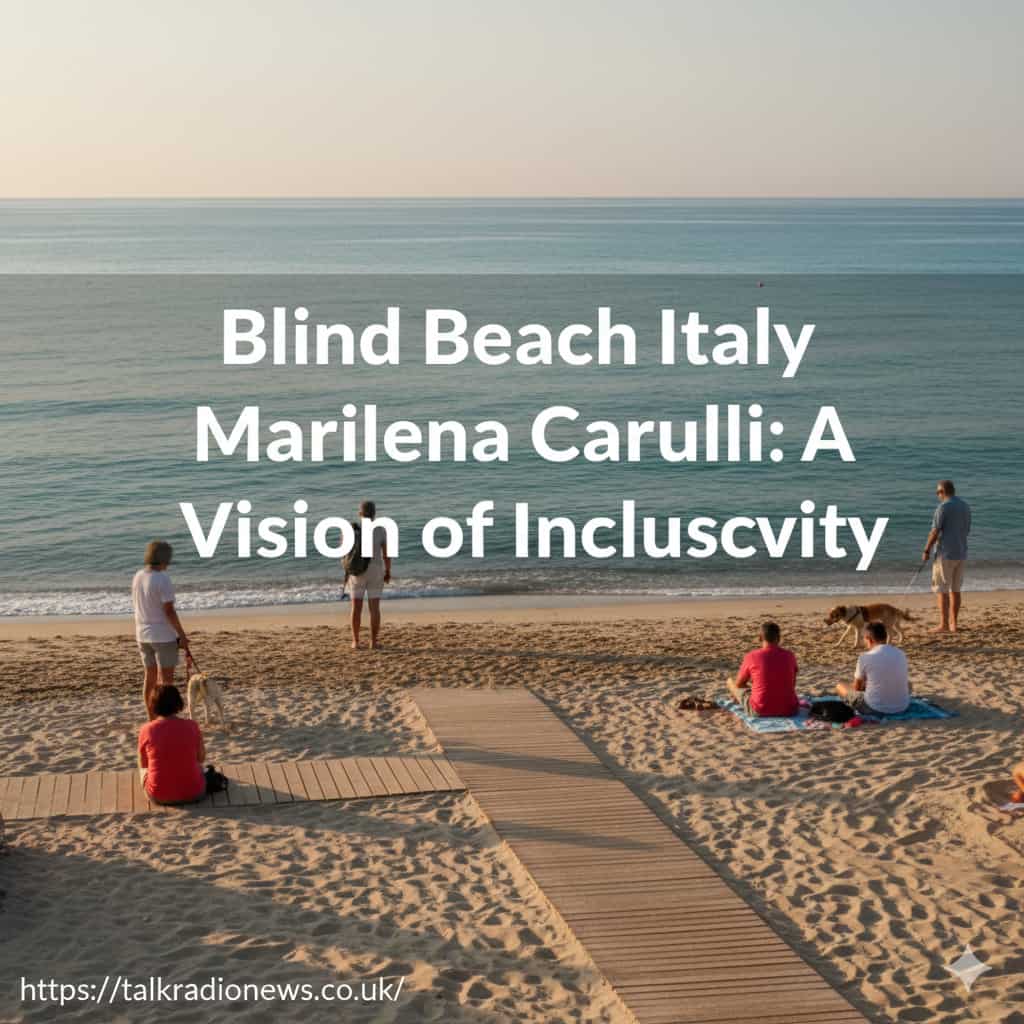
Have you ever pictured a perfect beach day—warm sun, soft sand, and gentle waves? For many people, that’s a simple joy. For those who are blind or have low vision, though, a day at the beach isn’t always easy. That’s where the story of blind beach Italy Marilena Carulli comes in. In Tirrenia, a town in Tuscany, Italy, one special beach has been transformed so everyone, no matter their eyesight, can enjoy the beauty of the sea.
The project goes far beyond ramps or railings. Every detail—from the entrance to the water’s edge—is designed with care for safety and independence. This beach is a shining example of how public places can become welcoming for everyone, changing lives in the process.
Key Takeaways
- The Blind Beach in Tirrenia, Italy is built for people with vision impairment.
- Marilena Carulli started it to help visually impaired people enjoy the beach.
- Features include tactile walkways, sound signals, and special equipment.
- The beach helps raise awareness and promotes inclusion.
- It inspires other communities to make places accessible for all.
Who Is Marilena Carulli?
Behind every great idea, there’s a person who makes it happen. For this beach, that person is Marilena Carulli. She’s an educator and the leader of the Italian Union of the Blind and Partially Sighted in Pisa. Marilena has spent her career helping blind people be more independent. Her dream wasn’t only to make a beach that’s usable, but to make it fun and empowering.
Marilena listened to stories from people in her community who felt left out, even during something as simple as a day at the beach. She saw how tough it was for them to move around, find things, or just relax. With that in mind, she brought together local leaders, businesses, and volunteers to create the blind beach Italy Marilena Carulli. Her dedication made this dream a reality.
The Start of a New Idea
Making an accessible beach wasn’t easy. It took teamwork, planning, and a deep understanding of the challenges blind people face, especially at the seaside. Marilena’s group looked carefully at what made a regular beach hard for blind visitors. For example: navigating sand, finding restrooms or cafés, or entering the water safely.
Marilena’s team explained these problems to local officials and showed how much happier and included people would feel. They got funding from the city of Pisa and teamed up with the “Le Tamerici” bathing facility right on the water. That partnership helped the project grow quickly, attracting volunteers and supporters who believed in a fairer, more welcoming community.
Independence by Design: Making the Beach Accessible
What makes this beach so special is the way it’s laid out. Everything is designed to help blind and partially sighted people get around safely and confidently. From the moment you step onto the beach until you swim in the water, you can move on your own, without needing much help.
This focus on independence sets the beach apart. It’s not just about giving extra help, but about letting people have freedom and fun. Thanks to careful planning, the blind beach Italy Marilena Carulli is now a role model for accessible design.
A Tactile Pathway from Start to Shore
Access starts at the parking lot, where a textured path leads you to the umbrellas and down to the water. This path feels different from the sand, so it’s easy to follow with a cane or your feet. Think of it like a yellow brick road, guiding you safely through the sand.
How Tactile Paving Works
Tactile paving uses special textures to send signals. For example, a straight surface means “keep going,” while bumps or dots indicate a turn, a crossing, or a stop. This helps blind users know exactly where they are, making it possible to get to their favorite beach spot without asking for help. It’s a small change that makes a huge difference.
Sounds to Guide the Way
Sound also plays a big role. Small audio beacons—like chimes or buzzers—are placed at important spots: the entrance, the bar, and the restrooms. By following the sound, people can find what they need.
There are also audio guides available. These guides describe the layout and services of the beach, so visitors know what to expect. Combining touch with sound makes the experience safer and less stressful.
Special Equipment Makes a Big Difference
Accessibility means more than just paths and signs. This beach provides special gear that helps everyone feel comfortable and safe, both on land and in water.
Easy-to-Use Umbrellas and Sunbeds
The beach umbrellas and chairs are spaced out along the tactile path. It’s easy to find an open spot, and there’s plenty of room for guide dogs. Some umbrellas even have braille numbers, so visitors know exactly where they are.
Simple and Safe Ways to Swim
One of the hardest parts of a beach day for blind visitors can be getting into the water safely. On this beach, a sturdy walkway goes all the way to the shoreline. There are also special amphibious wheelchairs available, which can roll over sand and float in the water. With these, even people with mobility issues or who are blind can enjoy a swim—sometimes with help from a lifeguard or friend.
Table: Traditional Beach vs. Accessible Beach
Feature | Regular Beach | Blind Beach in Italy |
|---|---|---|
Navigation | Sight only—no special help | Tactile paths and audio signs |
Getting to Water | Uneven sand, no clear path | Walkway right to the water’s edge |
Equipment | Typical umbrellas and chairs | Braille labels, spaced seating, special gear |
Independence | Needs extra help | Designed for user independence |
Information | Visual maps and signs | Braille, audio guides, tactile maps |
More Than a Beach: The Social Impact
The blind beach Italy Marilena Carulli project is about much more than just sand and surf. It shows what’s possible when a community values inclusion and respect. Creating a space where visually impaired people feel welcome helps to challenge stereotypes. It proves that everyone should get a chance to relax at the beach—no matter what.
The beach also helps bring people together. Visitors often make new friends, parents connect with others, and families relax without worry. Local news and TalkRadioNews have reported on this special project, calling attention to how a local idea can spark big changes.
A Model for Other Places
This beach is now famous around the world. People from different countries have visited to see how it works. Other towns and cities are interested in copying its design. The project shows that with teamwork, listening, and the right tools, every beach could be this welcoming.
Communities looking to improve should remember three things: listen to people with disabilities, partner with both public and private groups, and always focus on real independence. Universal access makes life better for everyone. As the U.S. Access Board says, true public access comes from smart, user-friendly design.
Accessible Tourism: The Future Is Inclusive
The blind beach Italy Marilena Carulli is part of a bigger change called accessible tourism. This is about making vacations and public places welcoming to everyone, not just people who are able-bodied. More people want to travel as accessible options grow. With aging populations and more awareness, the need for accessible tourism keeps rising.
When places invest in accessibility, they’re not just doing the right thing—they also attract more visitors from around the world. This is in line with the Sustainable Development Goals, especially the goal to reduce inequalities.
Conclusion
The story of the blind beach Italy Marilena Carulli is about hope and determination. It all began with one woman’s vision but became real through teamwork. Visitors who once felt left out now find dignity, freedom, and fun. The beach proves that a more accessible world is in our reach—one where everyone can join in, enjoy the outdoors, and feel included.
Frequently Asked Questions (FAQ)
Where is the Blind Beach in Italy?
Tirrenia, in the province of Pisa, Tuscany. It’s at the “Le Tamerici” bathing area.
Is it just for blind people?
No! Everyone is welcome. The design helps visually impaired guests but is fun for all.
Do you have to pay to use these features?
There’s usually a small entry fee that covers everything, including accessible facilities.
Are there other helpful features?
Yes. There are accessible bathrooms, showers, and trained staff to help visitors.
How was the beach made possible?
Through teamwork and funding from the city, the Italian Union of the Blind, and private partners.













Leave a comment