


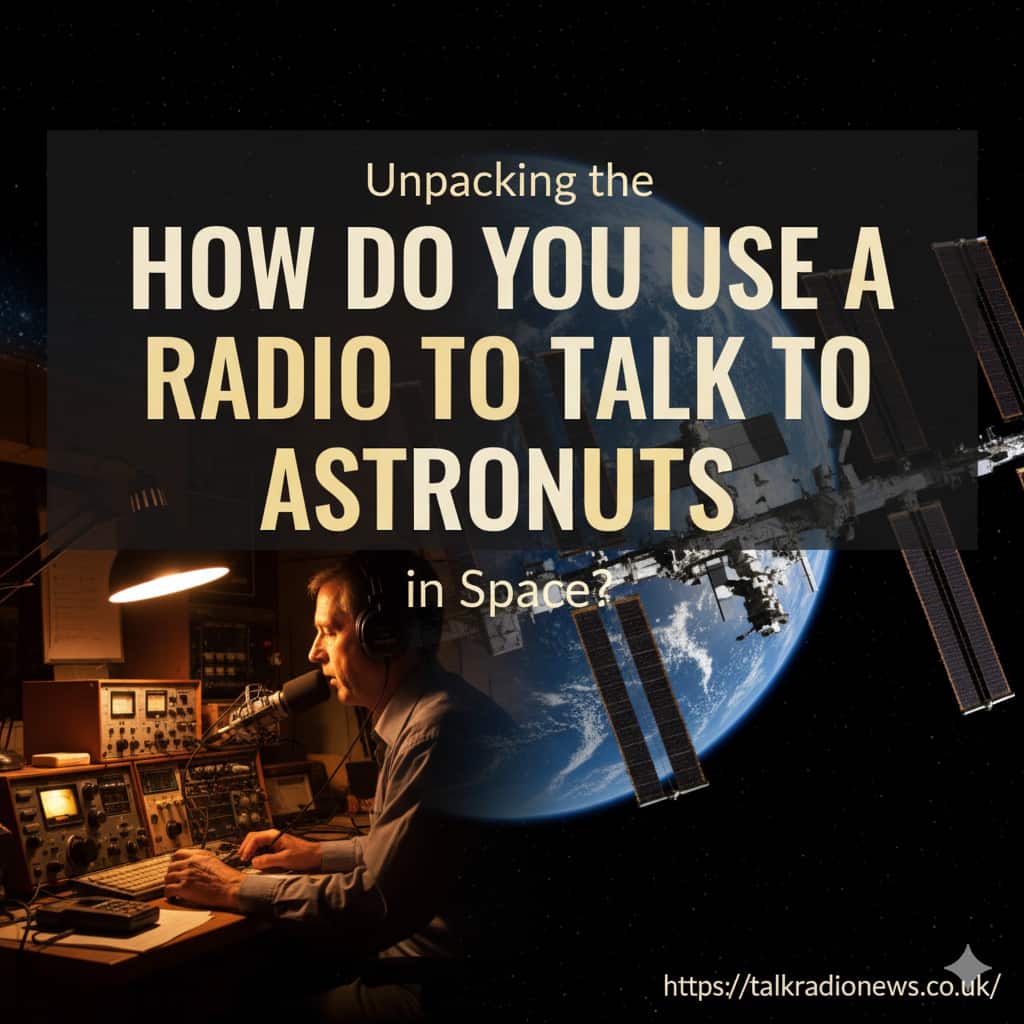
Have you ever looked up at the night sky and wondered what it would be like to talk to someone floating among the stars? It might sound like science fiction, but it’s entirely possible. For decades, amateur radio operators have been communicating with astronauts orbiting Earth. This article will guide you through the fascinating process and explain how do you use a radio to talk to astronauts, turning a seemingly complex task into an achievable and exciting hobby.
Communicating with the International Space Station (ISS) is more accessible than you might think. It requires specific equipment, precise timing, and a bit of luck. Whether you’re a seasoned ham radio enthusiast or just curious about space, this guide will provide the foundational knowledge you need to start your journey toward making contact with an astronaut.
Key Takeaways
- Amateur Radio is Key: You need a specific type of radio, known as a ham radio, and an amateur radio license to legally transmit signals to the ISS.
- Timing is Everything: The ISS travels at over 17,000 miles per hour, meaning you only have a short window of about 10 minutes to make contact as it passes overhead.
- Special Programs Exist: NASA and other space agencies actively support programs like ARISS (Amateur Radio on the International Space Station) to connect students and enthusiasts with astronauts.
- It’s More Than Just Talking: You can also receive images and data packets transmitted from the ISS using the same radio equipment.
Understanding the Basics of Space Communication
Communicating across the vastness of space isn’t as simple as making a phone call. Radio waves are the messenger, traveling from your antenna on the ground to the ISS as it orbits our planet. However, these signals must navigate through Earth’s atmosphere and contend with the incredible speed of the station.
The ISS is equipped with a dedicated amateur radio station. Astronauts who are licensed ham operators can use this equipment during their free time to talk to people on Earth. The primary challenge for you is knowing exactly when the ISS will be in range of your location. The station must be above the horizon for your radio signals to have a clear line of sight.
The Role of Amateur Radio (Ham Radio)
So, what exactly is amateur radio? Often called “ham radio,” it’s a popular hobby and service that brings people, electronics, and communication together. Operators use their radio stations to talk across town, around the world, or even into space. It’s a non-commercial activity, meaning you can’t use it for business purposes.
To become a ham radio operator, you need to get a license from your country’s telecommunications authority. In the United States, this is the Federal Communications Commission (FCC). Getting a license involves passing an exam that covers basic electronics, radio wave behavior, and operating rules. This ensures that operators know how to use their equipment properly and safely without interfering with other radio services.
Why Do You Need a License?
The licensing requirement is crucial. Transmitting radio signals is a regulated activity to prevent chaos on the airwaves. An unlicensed operator could accidentally interfere with critical communications, such as those used by aircraft, emergency services, or commercial broadcasters. The FCC exam process verifies that you understand the technical and legal aspects of radio operation, making you a responsible member of the ham radio community. The journey to getting licensed is a rewarding part of learning how do you use a radio to talk to astronauts.
Essential Equipment for Contacting the ISS
You don’t need a mission control center in your backyard to talk to astronauts. A relatively modest setup can get the job done. Here is the essential gear you will need.
1. A VHF/UHF Transceiver
This is the heart of your station. A transceiver is a device that can both transmit and receive radio signals. To communicate with the ISS, you’ll need one that operates on the 2-meter (VHF) and 70-centimeter (UHF) bands. These are the frequencies used by the ARISS program. Handheld transceivers (like a walkie-talkie) can work, but a more powerful base station or mobile radio will give you a much better chance of success.
2. An Antenna
Your antenna is just as important as your radio. It sends your signal out into space and captures the weak signals coming back from the ISS. For beginners, a simple dual-band vertical antenna mounted high up and in the clear can be effective. However, the best results come from using a directional antenna, like a Yagi antenna. You can point a directional antenna directly at the ISS as it moves across the sky, focusing your radio energy for a stronger signal.
3. Tracking Software or Apps
Since the ISS is a moving target, you need to know where it is at all times. Satellite tracking software is essential. There are many free and paid programs available for your computer or smartphone, such as Orbitron or apps like Heavens-Above. These tools will show you the exact path of the ISS, when it will be visible from your location, and where you need to point your antenna.
Choosing the Right Radio: Handheld vs. Base Station
When you’re just starting, the choice between a handheld radio and a more permanent base station can be confusing. Both have their pros and cons for contacting the ISS.
Feature | Handheld Transceiver | Base Station Radio |
|---|---|---|
Power Output | Low (Typically 5-8 watts) | High (Typically 25-100 watts) |
Antenna | Small, attached “rubber duck” antenna | Requires external, often larger antenna |
Portability | Very portable, can be used anywhere | Fixed in one location (home, car) |
Cost | Generally less expensive | More expensive |
Effectiveness | Challenging but possible for strong passes | Much higher chance of successful contact |
For beginners, a powerful handheld radio paired with an upgraded antenna can be a good starting point. However, investing in a base station radio and a proper directional antenna will significantly increase your chances of making a clear, successful contact.
How Do You Use a Radio to Talk to Astronauts: Step-by-Step
Once you have your license and equipment, it’s time to put it all together. Follow these steps to prepare for an ISS contact.
Step 1: Find the Frequencies
The ISS amateur radio station uses specific frequencies for communication. These can sometimes change, so it’s vital to check the official ARISS website for the most current information. Generally, voice communications happen on a VHF frequency. You will listen for the astronaut’s transmission on one frequency (the downlink) and transmit on a slightly different one (the uplink). This is known as operating “split.”
Step 2: Track the ISS
Use your tracking software to find the next good pass over your location. A “good” pass is one where the station rises high above the horizon (ideally more than 40 degrees). The higher the pass, the longer the contact window and the clearer the signal will be. Your software will tell you the start time, maximum elevation, and end time of the pass.
Step 3: Prepare for Doppler Shift
Because the ISS is moving so fast relative to you, the frequency of its radio signal will appear to change. This is called the Doppler effect, the same phenomenon that makes a siren change pitch as an ambulance passes you. As the ISS approaches, its frequency will seem slightly higher; as it moves away, it will seem lower. You must adjust your radio’s receiving frequency during the pass to compensate for this shift and keep the signal clear.
Step 4: Make the Call
As the ISS comes over the horizon, begin listening on the downlink frequency. You may hear the astronaut talking to someone else. Wait for a pause in the conversation. When you get a chance, transmit your call sign clearly and concisely. For example: “NA1SS, this is [Your Call Sign], over.” Keep it short! If the astronaut hears you, they may respond.
What to Say
If you make contact, be prepared! Have a few short questions or a simple greeting ready. Remember that the astronaut is likely talking to many people and has very limited time.
- Introduce yourself with your name and location.
- Ask a simple question, like “What does the Earth look like from up there today?”
- Thank them for the contact.
- Keep your transmission brief to give others a chance.
Beyond Voice: Receiving SSTV Images
Talking to an astronaut is just one way to interact with the ISS. The station also regularly transmits images using a method called Slow-Scan Television (SSTV). These are special events, often held to celebrate an anniversary or milestone.
During an SSTV event, the ISS broadcasts images one line at a time over the radio. You don’t need a license to receive them. With your VHF radio connected to a computer or smartphone running SSTV decoding software, you can capture these signals and watch as an image slowly appears on your screen. It’s a magical experience to receive a picture directly from space. The latest talkradionews often covers upcoming SSTV events.
FAQs: Answering Your Questions
Q1: How much does it cost to get started?
The cost can vary widely. A basic setup with a handheld radio and a simple antenna might cost a few hundred dollars. A more advanced base station with a directional antenna could cost a thousand dollars or more. The FCC license exam fee is typically small, around $15.
Q2: How often are astronauts on the air?
This depends on the astronauts’ schedules. They operate the radio in their personal time, so activity can be sporadic. Some astronauts are very active, while others are not. Following ARISS announcements and online forums is the best way to know when activity is likely.
Q3: Can I use any radio to listen to the ISS?
You can use a simple police scanner or an online WebSDR (Software Defined Radio) to listen for the ISS downlink signal. This is a great way to get started and see if you can hear the station without investing in transmitting equipment. However, to talk back, you need a licensed amateur radio transceiver.
Q4: What are the chances of actually talking to an astronaut?
It’s challenging but not impossible. Many factors have to align: the ISS must be passing overhead, an astronaut must be on the air, and they have to hear your specific call among potentially hundreds of others. Persistence is key. Even if you don’t make contact on your first try, the process of trying is a thrilling technical challenge.
Your Journey to the Stars Starts Now
Discovering how do you use a radio to talk to astronauts is an incredible adventure that blends science, technology, and a sense of wonder. While it requires dedication to get a license and set up your equipment, the reward of making a direct connection with a human orbiting our planet is an unforgettable experience.
Start by exploring resources from organizations like the ARRL (the national association for amateur radio) and the official ARISS website. Join local radio clubs and connect with experienced operators who can guide you. Every time the ISS streaks across your sky, it’s an opportunity. With the right knowledge and gear, you might just be the next voice an astronaut hears from Earth.












Leave a comment