


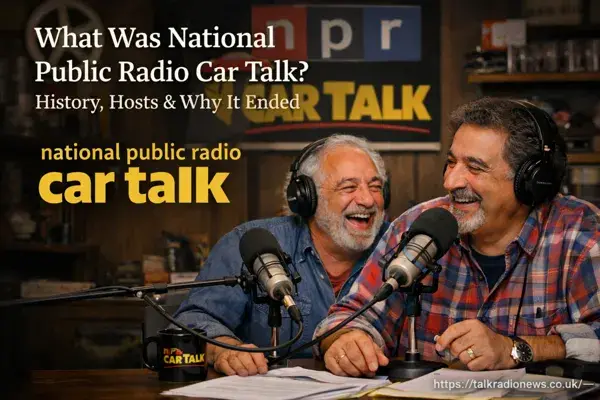
What Was National Public Radio Car Talk?
National Public Radio Car Talk was a weekly call-in radio program that aired nationally on National Public Radio (NPR) from 1987 to 2012. Hosted by Tom Magliozzi and Ray Magliozzi, the show combined real automotive advice with humor, puzzles, and listener interaction, becoming one of the most popular entertainment programs in public radio history.
- What Was National Public Radio Car Talk?
- National Public Radio Car Talk at a Glance
- From a Boston Garage to National Fame
- Who Were “Click and Clack”?
- What Made Car Talk So Popular?
- Why Did Car Talk End?
- The Cultural Impact of Car Talk
- Where Can You Listen to Car Talk Today?
- Frequently Asked Questions
- Is Car Talk still on NPR?
- When did National Public Radio Car Talk start and end?
- Who were the hosts of Car Talk?
- Why did the hosts retire?
- How many episodes were recorded?
- Conclusion
For millions of Americans, it wasn’t just a radio show. It was a Saturday morning ritual.
National Public Radio Car Talk at a Glance
Started locally: 1977 on WBUR (Boston)
National launch: 1987 on NPR
Hosts: Tom and Ray Magliozzi (“Click and Clack”)
Format: Listener car problems + comedy + weekly “Puzzler”
Final new episode: October 2012
Current status: Airs as The Best of Car Talk (classic episodes)
From a Boston Garage to National Fame
Car Talk began almost accidentally. In 1977, WBUR in Boston invited a panel of mechanics for a call-in segment. Only Tom showed up. Ray joined soon after, and what started as a modest local program slowly gained a devoted following.
The brothers weren’t traditional radio personalities. They owned a real repair shop in Cambridge, Massachusetts — the Good News Garage — and both were graduates of MIT. That unlikely mix of high-level engineering knowledge and everyday garage experience gave the show its unique credibility.
By 1987, NPR recognized something special and launched the program nationally. It quickly became the network’s most successful entertainment show, reaching more than four million weekly listeners at its peak.
Who Were “Click and Clack”?
Tom and Ray Magliozzi were brothers first, mechanics second, and accidental entertainers third.
Tom, the older brother, had a booming, unmistakable laugh that often lasted longer than the joke itself. Ray played the slightly more grounded role, guiding conversations back to the caller’s problem — though he was just as quick with a punchline.
They called themselves “Click and Clack, the Tappet Brothers,” a deliberately goofy nickname that reflected the spirit of the show. Despite the humor, their advice was grounded in decades of real-world experience. They never talked down to callers. They explained complex engine issues in everyday language.
Listeners trusted them — not just because they were smart, but because they were honest. If they weren’t sure, they said so.
What Made Car Talk So Popular?
On paper, a show about transmission problems shouldn’t have worked.
But Car Talk wasn’t really about cars.
It was about people.
Callers shared stories about broken-down station wagons, mysterious clunking noises, and vehicles held together with duct tape. The brothers responded with jokes, storytelling, and surprisingly accurate diagnoses. They made mechanics feel less intimidating and more human.
Recurring segments helped build loyalty:
The Puzzler – A weekly logic brain teaser
Stump the Chumps – Revisiting past diagnoses to see if they were right
Closing Credits Gag – Thanking fictional staff members with ridiculous names
And then there was their famous sign-off:
“Don’t drive like my brother.”
It became part of American radio culture.
Why Did Car Talk End?
After 25 years on national radio, the brothers announced in June 2012 that they would stop producing new episodes. They felt it was the right time to retire and end the show on a high note.
The final new episode aired in October 2012.
However, the story didn’t end there.
Because the show had recorded over 1,200 episodes, NPR began airing curated classic broadcasts under the name The Best of Car Talk. These remixed episodes continue to run weekly on many stations and as a podcast.
In 2014, Tom Magliozzi passed away due to complications from Alzheimer’s disease. His death marked the emotional close of an era. But his laughter — that unforgettable laugh — still echoes in every rebroadcast.
The Cultural Impact of Car Talk
Car Talk proved something important: educational content doesn’t have to be serious to be meaningful.
The program brought new listeners to NPR. It demonstrated that personality-driven radio could thrive without political debate or breaking news. Long before podcasts became mainstream, Car Talk mastered the formula — authentic conversation, humor, expertise, and community.
Today, countless advice podcasts borrow that blueprint.
More importantly, the show changed how people relate to their cars. It empowered listeners to ask smarter questions at repair shops and to feel less intimidated by mechanical jargon.
That legacy is hard to measure — but easy to feel.
Where Can You Listen to Car Talk Today?
Even though no new episodes are being recorded, you can still listen in several ways:
The Best of Car Talk podcast (available on major platforms)
Weekend broadcasts on many NPR affiliate stations
The official Car Talk website archive
A new generation continues to discover Click and Clack every week.
Frequently Asked Questions
Is Car Talk still on NPR?
Yes. While new episodes ended in 2012, NPR continues to air The Best of Car Talk, which features remixed classic broadcasts from the archive.
When did National Public Radio Car Talk start and end?
The show began locally in 1977 on WBUR in Boston and launched nationally on NPR in 1987. New episodes ended in October 2012.
Who were the hosts of Car Talk?
The show was hosted by brothers Tom and Ray Magliozzi, also known as “Click and Clack, the Tappet Brothers.”
Why did the hosts retire?
Tom and Ray chose to retire in 2012 to enjoy a slower pace of life and preserve the quality of the program while it was still at its peak.
How many episodes were recorded?
Over 1,200 episodes were produced during the show’s 35-year run, creating one of public radio’s richest archives. For more insights on talk radio programs and popular shows, check out Talk Radio News.
Conclusion
National Public Radio Car Talk was more than a show about engines and oil leaks. It was a masterclass in connection — a reminder that expertise and humor can live side by side.
Through laughter, patience, and genuine curiosity, Tom and Ray Magliozzi transformed a niche topic into a national tradition. Even without new recordings, the show remains alive in archives, podcasts, and the memories of listeners who still smile when they hear that familiar laugh.
Some radio programs inform.
Car Talk connected.
And that’s why it still matters.
Disclaimer: All information is based on publicly available sources and official archives. For informational purposes only.








Leave a comment