


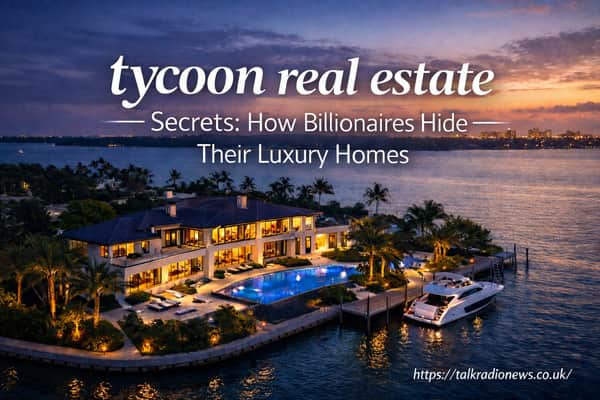
Have you ever wondered about the magnificent homes owned by business magnates and industry leaders? The world of tycoon real estate is a fascinating intersection of immense wealth, architectural marvels, and complex privacy measures. These are not just houses; they are sprawling estates, private islands, and luxury penthouses that often remain shielded from public view. This article explores how these properties are bought, managed, and tracked, using publicly available information to peek behind the curtain. We will delve into the methods used to maintain privacy, the digital footprint these properties leave, and what public records can tell us about these incredible homes.
- Key Takeaways
- Understanding the Scale of Tycoon Real Estate
- The Art of Anonymity: How Ownership is Hidden
- Digging into Public Records for Clues
- The Digital Footprint of Luxury Properties
- Shell Companies vs. Trusts: A Comparison
- The Role of Off-Market or “Pocket” Listings
- Architectural Significance and Unique Features
- Navigating the Ethics of Tracking Wealth
- The Future of Privacy in Real Estate
- Conclusion
- Frequently Asked Questions (FAQ)
Key Takeaways
- Tycoon real estate involves high-value properties owned by extremely wealthy individuals, often featuring unique architecture and extensive amenities.
- Owners use legal structures like LLCs, trusts, and shell companies to maintain privacy and protect their assets.
- Public records, such as deeds and tax assessments, provide official information about property ownership, though it can be obscured.
- The digital footprint of these properties includes satellite imagery, online news articles, and social media, which can sometimes reveal details not in official records.
- Balancing privacy with transparency is a major challenge in the high-end real estate market.
Understanding the Scale of Tycoon Real Estate
What exactly qualifies as tycoon real estate? It’s a category of property defined by more than just a high price tag. These are homes that represent the pinnacle of luxury, innovation, and exclusivity. Think of vast estates with private golf courses, skyscrapers with multi-level penthouses, or even entire islands transformed into personal getaways. The owners are typically billionaires, CEOs of major corporations, and titans of industry who have amassed significant fortunes.
The scale of these properties is often immense. They can include dozens of bedrooms, state-of-the-art security systems, private cinemas, and staff quarters that are larger than average family homes. For these owners, a property is not just a place to live but also a statement, an investment, and a private sanctuary. Understanding this context is key to appreciating why privacy is so paramount and why tracking these properties requires a unique approach that goes beyond standard real estate searches.
The Art of Anonymity: How Ownership is Hidden
Privacy is the ultimate luxury for the world’s wealthiest individuals. When purchasing high-value properties, they rarely use their own names. Instead, they employ sophisticated legal strategies to create a buffer between their identity and their assets. The most common method is using a Limited Liability Company (LLC). An LLC is a legal entity that can own property, and the owner of the LLC is not always a matter of public record, depending on state laws. This makes it difficult for the public to connect a property to a specific person.
Other tools include trusts, where a trustee holds the property on behalf of beneficiaries, and shell corporations, which exist primarily on paper to hold assets. These structures not only provide anonymity but also offer liability protection and can simplify estate planning. Unraveling these ownership webs often requires deep investigation into corporate filings and legal documents, a task that can be both complex and time-consuming.
Digging into Public Records for Clues
Despite the layers of privacy, every property transaction leaves a paper trail. Public records are the foundation for uncovering information about tycoon real estate. When a property is sold, a deed is recorded with the local government, usually at the county clerk’s or recorder’s office. This document proves ownership transfer. While the deed might list an LLC as the owner, it still provides a starting point for an investigation. Tax assessment records are another valuable resource. These documents, which are also public, list the assessed value of the property for tax purposes and often include details like square footage, number of rooms, and recent sale prices. By cross-referencing these documents, one can start to build a picture of a property’s history and value.
The Digital Footprint of Luxury Properties
In our connected world, even the most private properties leave a digital trace. Satellite imagery from services like Google Earth provides a bird’s-eye view of sprawling estates, revealing features like pools, tennis courts, and even the layout of the grounds. While these images might not be updated daily, they offer a visual record that is hard to erase. Furthermore, news articles and media coverage, especially from local outlets or financial publications like those found on TalkRadioNews.co.uk, can provide significant clues. A major sale or a controversial development plan often generates press, sometimes revealing the names of architects, developers, or even the buyers involved. Social media can also be an unexpected source, with event photographers or guests occasionally posting images that inadvertently showcase parts of a private residence.
Shell Companies vs. Trusts: A Comparison
When it comes to holding high-value real estate, tycoons have several options. Both shell companies (often LLCs) and trusts are popular, but they serve slightly different purposes and offer distinct advantages. Understanding their differences helps clarify why one might be chosen over the other.
Feature | Shell Company (LLC) | Trust |
|---|---|---|
Primary Purpose | To hold assets and limit liability | To manage assets for beneficiaries |
Ownership | Owned by members; can be another company | Managed by a trustee for beneficiaries |
Public Record | Name of LLC is public; members may be private | Trust name may be on the deed; beneficiaries are private |
Control | Members/managers have direct control | Trustee has control, must act in beneficiaries’ interest |
Flexibility | High; easy to transfer ownership of the LLC | Moderate; governed by the terms of the trust document |
Best For | Asset protection and transactional anonymity | Estate planning and long-term asset management |
This table shows that while both methods obscure direct ownership, an LLC offers more direct control and liability protection for business-minded transactions. A trust is often preferred for managing wealth across generations and ensuring assets are distributed according to the owner’s wishes after their passing.
The Role of Off-Market or “Pocket” Listings
A significant portion of tycoon real estate transactions never appear on public listing services. These are known as “off-market” or “pocket” listings. In these deals, the seller wants to maintain absolute privacy and avoid the publicity that comes with a public sale. They work with a trusted real estate agent who discreetly markets the property to a pre-vetted list of qualified potential buyers. This network is built on relationships and reputation.
The advantages of this approach are clear:
- Confidentiality: The sale remains private, protecting the seller and buyer from public scrutiny.
- Exclusivity: Buyers get access to properties no one else knows are for sale.
- Efficiency: The process is often faster, as it involves serious, well-funded buyers.
These quiet transactions make tracking the movement of tycoon real estate particularly challenging. Unless the information is leaked to the media or uncovered through diligent public record searches after the fact, these multi-million dollar deals can fly completely under the radar.
Architectural Significance and Unique Features
Beyond their size and price, many properties in the realm of tycoon real estate are architecturally significant. Owners often commission world-renowned architects to design homes that are not just residences but also works of art. These homes may feature cutting-edge sustainable technology, innovative materials, or designs that push the boundaries of modern engineering. For example, a home might be built into a cliffside, feature a retractable glass roof, or have an indoor waterfall that spans multiple floors. These unique features add to the property’s value and mystique. They also make the property more recognizable, which can sometimes work against the owner’s desire for privacy if the design is too distinctive and becomes a local landmark.
Navigating the Ethics of Tracking Wealth
Investigating and reporting on the property holdings of wealthy individuals raises important ethical questions. There is a fine line between legitimate public interest and an invasion of privacy. Journalists and researchers must consider the motivation behind their work. Is it to hold powerful people accountable and promote transparency, or is it simply to satisfy public curiosity? While property records are public, the lives of the people who own them are not. Responsible reporting focuses on the facts available through official channels and avoids speculation about the owner’s personal life. The goal should be to inform the public about matters of potential interest, such as economic trends in luxury markets or the impact of large developments, without infringing on an individual’s right to privacy.
The Future of Privacy in Real Estate
As technology advances, the challenge of maintaining privacy in real estate will only grow. The rise of drone photography, more sophisticated satellite imaging, and data mining algorithms means that more information is accessible than ever before. In response, the strategies used to protect anonymity are also evolving. We may see an increase in the complexity of legal structures, with multiple layers of shell companies registered in different jurisdictions to make the ownership trail even harder to follow. The world of tycoon real estate will continue to be a cat-and-mouse game between the desire for privacy and the public’s ability to access information. This dynamic ensures that the market for ultra-luxury homes remains one of the most secretive and intriguing corners of the global economy.
Conclusion
The world of tycoon real estate is a captivating subject that highlights the lengths to which individuals will go to secure their privacy and protect their assets. Through the strategic use of LLCs and trusts, owners create layers of anonymity that are difficult to penetrate. However, a combination of public records, digital footprints, and careful investigation can reveal glimpses into these exclusive properties. Understanding this hidden market is not just about marveling at luxury; it’s about recognizing the complex interplay between wealth, law, and technology that shapes our world. As information becomes more accessible, the strategies for maintaining privacy will undoubtedly become even more sophisticated.
Disclaimer: This article is for informational purposes only and is based on research of publicly available records and digital information. It does not make any claims about individuals and respects the privacy of property owners.
Frequently Asked Questions (FAQ)
1. What is the most common way tycoons hide property ownership?
The most common method is by purchasing property through a Limited Liability Company (LLC). This places the name of the company on the public deed instead of the individual’s name, providing a layer of anonymity.
2. Are property records truly public?
Yes, in most places, property records like deeds and tax assessments are public documents accessible through local government offices or their websites. However, the information can be obscured by legal entities.
3. What is an off-market listing?
An off-market, or “pocket,” listing is a property that is for sale but not advertised publicly. A real estate agent markets it privately to a select network of potential buyers to maintain confidentiality.
4. How does the digital world impact real estate privacy?
Satellite imagery, news articles, and social media create a digital footprint that can compromise privacy. Even heavily secured properties can be viewed from above or may be featured in online content, revealing details the owner wished to keep private.
5. Why is it important to track tycoon real estate?
Tracking these properties can provide insights into economic trends, wealth distribution, and the impact of large-scale property investments on local communities. It is a matter of public interest and transparency.













Leave a comment