


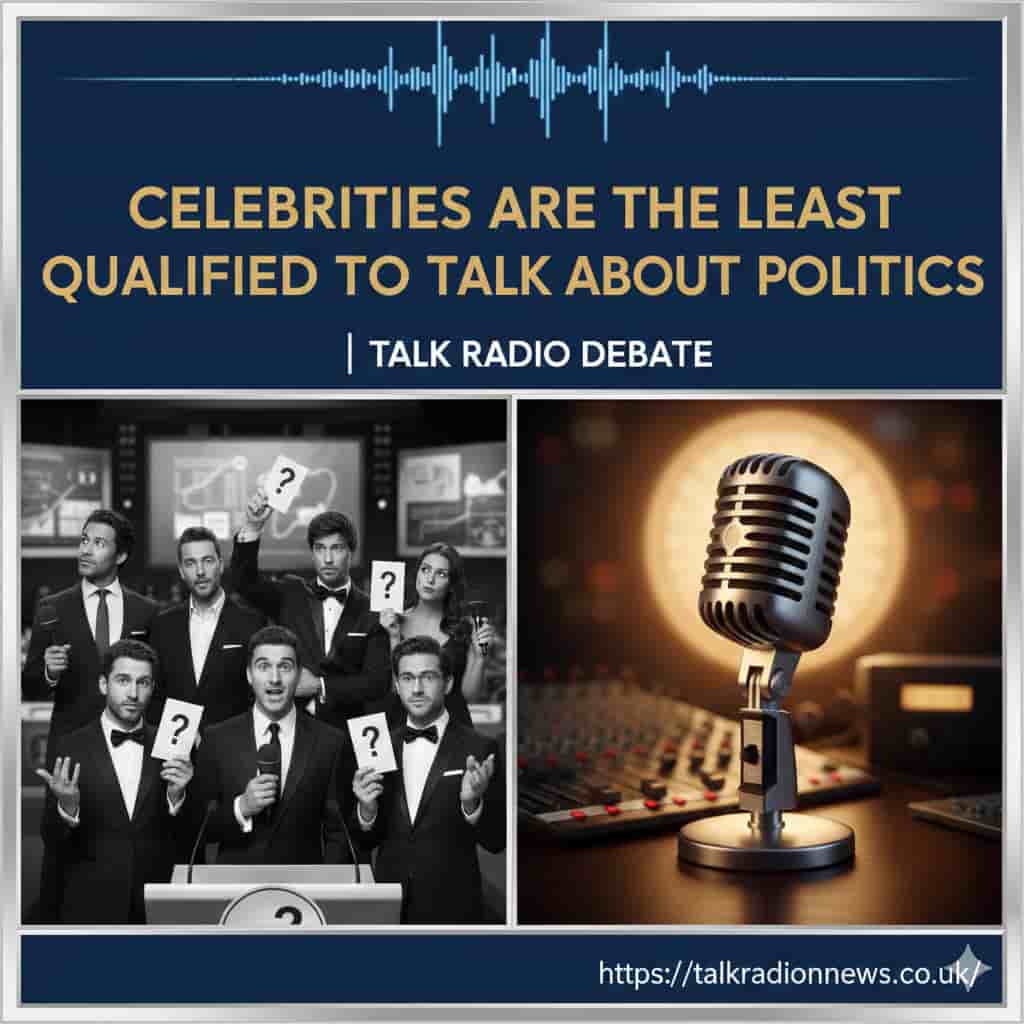
It’s a common sight these days: an actor, musician, or influencer shares their political opinions on social media, during an awards show speech, or in an interview. While everyone has a right to their own views, a growing number of people feel that celebrities are the least qualified to talk about politics. This topic is frequently debated on talk radio shows, where hosts and callers openly question whether celebrity opinions help or harm real political understanding. Their massive platforms give their words incredible reach, but does fame automatically grant them the expertise needed to guide public discourse on complex issues like policy, economics, and international relations? This article explores why the glitter of Hollywood might not be the best lens through which to view the intricate world of governance. We’ll examine the difference between a large audience and genuine expertise, the potential for misinformation, and why critical thinking is more important than ever.
Key Takeaways
- Fame does not equal expertise in complex fields like political science, economics, or law.
- Celebrity endorsements can oversimplify nuanced political issues, leading to a misinformed public.
- The echo chamber of celebrity culture often shields them from the diverse realities faced by average citizens.
- Relying on celebrity opinions can discourage personal research and critical engagement with political topics.
The Misconception of the Platform
Having millions of followers on Instagram or starring in a blockbuster movie grants a person immense influence. However, people often mistake this influence for authority. A celebrity builds their platform on entertainment talent, not on a deep understanding of political theory or legislative processes.
Influence vs. Expertise
Influence is the ability to affect the opinions or behaviors of others. Expertise, on the other hand, is specialized knowledge or skill in a particular field, usually acquired through extensive education and practical experience. A neurosurgeon has expertise in brain surgery; a pop star has influence over music trends and pop culture. When a celebrity speaks on politics, they are exercising influence, but rarely from a position of expertise. This creates a dangerous situation where charismatic delivery can be valued more than factual accuracy. The argument that celebrities are the least qualified to talk about politics centers on this critical distinction.
The Power of the Parasocial Relationship
Fans often develop one-sided, or parasocial, relationships with their favorite stars. They feel like they know them personally. This emotional connection makes their audience more receptive to their opinions, including political ones. People might adopt a celebrity’s viewpoint not because it’s well-reasoned, but because they admire the person stating it. This bypasses the critical thinking necessary for healthy democratic participation. Instead of researching a candidate’s policy proposals, someone might simply vote for them because their favorite actor did.
The Bubble of Wealth and Fame
A significant reason many believe celebrities are the least qualified to talk about politics is their detachment from the everyday concerns of the general population. Living a life of immense wealth and privilege can create a profound disconnect.
A World Away from Everyday Struggles
When a celebrity advocates for a certain economic policy, they are unlikely to feel its negative consequences. They don’t worry about slight increases in gas prices, rising grocery costs, or their ability to afford rent. Their financial security insulates them from the real-world impact of the policies they promote. This isn’t to say they are bad people; rather, their lived experience is fundamentally different from that of the average citizen. This lack of shared experience makes it difficult for them to genuinely understand the priorities and struggles of the people they are trying to influence.
How Celebrity Opinions Lack Nuance
Political issues are rarely black and white. They involve complex trade-offs, historical context, and a web of interconnected factors. Celebrities, often seeking to make a clear and impactful statement, tend to present these issues in overly simplistic terms. A 280-character tweet is not the ideal format for discussing the nuances of healthcare reform or foreign policy. This reductionism can be harmful, as it encourages binary thinking and discourages the public from engaging with the complexities of governance. It reduces important debates to good-versus-evil narratives, which is rarely the reality.
The Dangers of Misinformation
In an age of rampant misinformation, adding unqualified but amplified voices to the mix can be particularly damaging. Celebrities can, intentionally or not, become super-spreaders of inaccurate information.
When Good Intentions Go Wrong
Many celebrities who speak out are driven by a genuine desire to do good. However, without a solid foundation of knowledge, they can easily fall for and propagate misinformation. An emotional headline or a misleadingly edited video can be shared with millions in an instant, creating a false narrative that is difficult to correct. The very nature of their work means they are not trained researchers or fact-checkers. For more insights on media and public discourse, you can explore resources from talkradionews. A study from a reputable source like the Pew Research Center highlights how a significant portion of Americans get their news from social media, where celebrity voices are prominent and often unvetted.
H2: Celebrities Are the Least Qualified to Talk About Politics and Scientific Matters
This issue isn’t limited to politics. We often see celebrities promoting questionable health trends or expressing skepticism about established scientific consensus. Their lack of scientific literacy, combined with their massive platform, can have serious public health consequences. The same principle applies to politics. Just as you wouldn’t ask an actor for medical advice, it’s logical to question why their political advice should be treated as gospel. They may lack the fundamental understanding of civics, economics, and history required to form a truly informed opinion.
Expertise vs. Stardom: A Clear Distinction
Let’s break down the core differences between a political expert and a celebrity influencer.
Feature | Political Expert | Celebrity Influencer |
|---|---|---|
Foundation | Years of education, research, and practical experience in policy, law, or economics. | Success in entertainment, sports, or online content creation. |
Goal | To provide nuanced, evidence-based analysis of complex issues. | To express a personal opinion, often to generate engagement or signal virtue. |
Accountability | Professional reputation is tied to the accuracy and integrity of their analysis. | Accountability is primarily to their fanbase and personal brand. |
Understanding | Deep knowledge of legislative processes, historical context, and economic impact. | Often a surface-level understanding based on popular narratives or personal feelings. |
The Alternative: Empowering Citizens
The solution is not to silence celebrities. Freedom of speech is a fundamental right that applies to everyone. The solution is to change how we, the audience, consume their political content.
Cultivating Media Literacy
Instead of taking a celebrity’s post as fact, we should use it as a starting point for our own research. Who are they endorsing? What are that person’s actual policies? We can consult non-partisan sources, such as information available on USA.gov, to get direct information about government functions and elected officials. Developing strong media literacy skills allows us to separate a charismatic personality from a sound argument. It empowers us to become informed citizens rather than passive followers.
H3: Promoting Education in Civics
A stronger public understanding of how government works is the ultimate defense against unqualified opinions. When people are educated on the basics of civics—the separation of powers, the legislative process, and their rights and responsibilities—they are better equipped to evaluate political claims, regardless of who makes them. Investing in civics education is essential for a healthy democracy. According to the Center for Information & Research on Civic Learning and Engagement (CIRCLE) at Tufts University, a strong civic education leads to higher voter turnout and greater community involvement.
Finding and Following True Experts
If you want informed political commentary, follow political scientists, economists, journalists who specialize in policy, and respected historians. These individuals have dedicated their careers to understanding the topics they discuss. They may not have millions of Instagram followers, but the depth of their knowledge is far more valuable for anyone seeking to make an informed decision.
- Look for academics at reputable universities.
- Follow policy analysts from non-partisan think tanks.
- Read long-form journalism from established news organizations.
- Listen to podcasts that feature deep-dive interviews with experts.
Conclusion
The idea that celebrities are the least qualified to talk about politics is not an attack on them as individuals. It is a defense of expertise and a call for more critical engagement from the public. While celebrities have every right to express their views, we have a responsibility to ourselves and our democracy to seek out information from credible, knowledgeable sources. Their fame gives them a loudspeaker, but it does not give them a monopoly on truth or a special insight into what is best for the country. By fostering our own understanding and valuing expertise over influence, we can ensure that our political discourse is thoughtful, productive, and truly democratic.
Frequently Asked Questions (FAQ)
Q1: Shouldn’t celebrities use their platform for good?
A1: Absolutely. Celebrities can do immense good by raising awareness for charitable causes and humanitarian issues. The concern arises when they venture into specific, complex policy endorsements where their lack of expertise can oversimplify issues and mislead the public.
Q2: Are you saying celebrities should be silenced?
A2: Not at all. The principle of free speech applies to everyone. The argument is not about silencing anyone but about encouraging the public to be more discerning consumers of information and to prioritize expertise when forming their political opinions.
Q3: But aren’t some celebrities very well-informed?
A3: Some celebrities certainly take the time to educate themselves on issues they care about. However, they are the exception rather than the rule. The broader argument is that fame itself is not a qualification, and the public should not treat it as such. People should still view an informed celebrity as an engaged citizen, not an expert.
Q4: What’s the harm if a celebrity gets more young people to vote?
A4: Encouraging civic participation is positive. The harm comes when that participation is based on a superficial endorsement rather than an understanding of the issues. It’s better to encourage young people to vote and to research candidates and policies for themselves, rather than simply following a famous person’s lead.





Leave a comment